

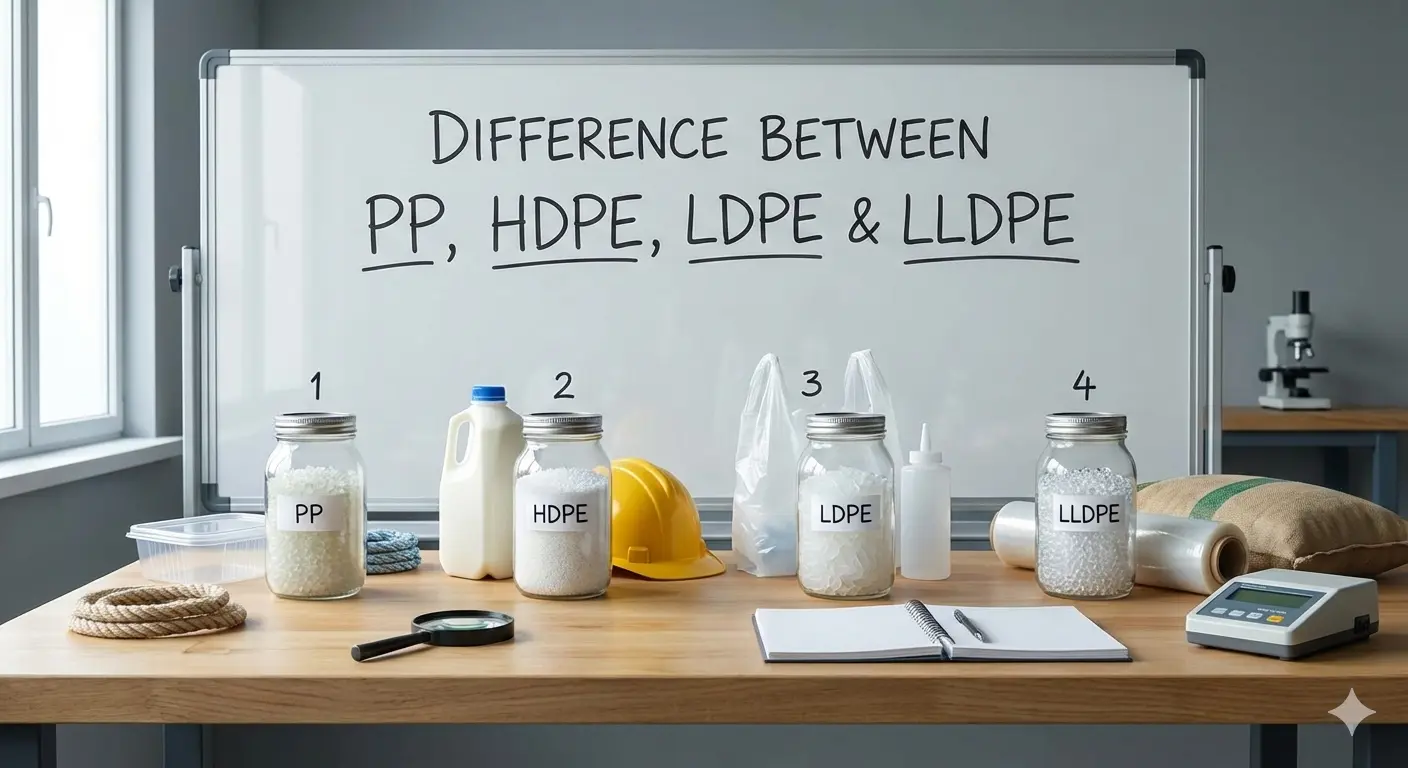
Difference between PP, HDPE, LDPE and LLDPE, Polypropylene (PP), High-Density Polyethylene (HDPE), Low-Density Polyethylene (LDPE), and Linear Low-Density Polyethylene (LLDPE) are among the most widely used thermoplastic polymers in the world. Each material has unique chemical structures, mechanical properties, and processing characteristics that make it suitable for specific industrial applications.
Understanding the difference between PP, HDPE, LDPE, and LLDPE is essential for manufacturers, engineers, and buyers when selecting the correct raw material for injection molding, blow molding, extrusion, or film production.
Overview of PP, HDPE, LDPE, and LLDPE
These polymers belong to the polyolefin family and are derived from petrochemical processes. Despite their similarities, small differences in molecular structure lead to significant variations in performance and application.
- PP is known for rigidity and heat resistance
- HDPE offers high strength and chemical resistance
- LDPE provides softness and flexibility
- LLDPE combines flexibility with high tensile strength
Polypropylene (PP)
Polypropylene is a versatile thermoplastic polymer widely used in injection molding and packaging applications.
Key properties of PP
- High rigidity and stiffness
- Excellent chemical resistance
- Good fatigue resistance
- Lightweight material
- Higher melting point compared to polyethylene
Common applications of PP
- household products
- automotive interior parts
- plastic crates and boxes
- caps and closures
- woven sacks and raffia products
PP is especially suitable for injection molding due to its stable processing behavior and surface finish.
High-Density Polyethylene (HDPE)
HDPE is a strong and durable plastic with a high strength-to-density ratio.
Key properties of HDPE
- High tensile strength
- Excellent impact resistance
- Strong chemical resistance
- Low moisture absorption
- Rigid structure
Common applications of HDPE
- bottles and containers
- oil and detergent cans
- industrial drums
- pipes and fittings
- crates and pallets
HDPE is commonly used in blow molding and extrusion applications where durability is critical.
Low-Density Polyethylene (LDPE)
LDPE is a flexible and soft plastic known for its excellent processability.
Key properties of LDPE
- High flexibility
- Low density
- Good transparency
- Moisture resistance
- Easy to process
Common applications of LDPE
- plastic bags
- flexible packaging
- agricultural films
- shrink and protective films
LDPE is widely used in film extrusion due to its softness and smooth surface.
Linear Low-Density Polyethylene (LLDPE)
LLDPE is a modified polyethylene with improved strength and flexibility.
Key properties of LLDPE
- High tensile strength
- Excellent puncture resistance
- Better stretch properties than LDPE
- Good impact resistance
- Improved toughness
Common applications of LLDPE
- stretch films
- shrink films
- heavy-duty packaging
- industrial liners
- agricultural films
LLDPE is preferred when higher strength and flexibility are required.
Key differences between PP, HDPE, LDPE, and LLDPE
Mechanical properties comparison
- PP is rigid and fatigue-resistant
- HDPE is strong and impact-resistant
- LDPE is soft and flexible
- LLDPE is flexible with higher tensile strength
Processing methods
- PP is mainly used for injection molding
- HDPE is suitable for blow molding and extrusion
- LDPE is ideal for film extrusion
- LLDPE is used in film extrusion and packaging
Temperature resistance
- PP has higher heat resistance
- HDPE performs well under moderate heat
- LDPE has lower heat resistance
- LLDPE has moderate thermal performance
Comparison table
| Property | PP | HDPE | LDPE | LLDPE |
|---|---|---|---|---|
| Rigidity | High | High | Low | Medium |
| Flexibility | Low | Low | High | High |
| Impact Resistance | Medium | High | Medium | High |
| Heat Resistance | High | Medium | Low | Medium |
| Typical Use | Injection | Blow / Extrusion | Film | Stretch Film |
How to choose the right material
When selecting between PP, HDPE, LDPE, and LLDPE, manufacturers should consider:
- product application
- required strength and flexibility
- processing method
- cost considerations
- environmental conditions
Choosing the correct polymer improves product quality, reduces waste, and optimizes production efficiency.
Sustainability and recycling considerations
All four materials can be recycled and reused in many applications. Recycled PP, HDPE, LDPE, and LLDPE granules are widely available and help reduce environmental impact while lowering production costs.
Using recycled polyolefins supports sustainability goals and circular economy initiatives.
FAQs About Difference between PP, HDPE, LDPE and LLDPE
What is the difference between LLDPE and HDPE and LDPE?
LLDPE is flexible and puncture-resistant, HDPE is rigid and strong with high density, and LDPE is soft and highly flexible. The main difference lies in molecular structure, density, strength, and typical applications.
What is the difference between LLDPE and PP?
LLDPE is more flexible and impact-resistant, while PP is stiffer, lighter, and more heat-resistant. LLDPE is mainly used for films, whereas PP is widely used in injection-molded products.
Are PP and HDPE the same?
No, PP and HDPE are different polymers. PP offers better heat resistance and rigidity, while HDPE provides higher impact strength and chemical resistance.
What are the 7 main types of plastic?
The seven main plastics are PET, HDPE, PVC, LDPE, PP, PS, and “Other” plastics such as ABS and polycarbonate.
Which is better HDPE or LDPE?
Neither is universally better. HDPE is stronger and more rigid, while LDPE is softer and more flexible. The better option depends on the intended application.
What is LLDPE used for?
LLDPE is commonly used for stretch film, packaging film, plastic bags, liners, agricultural films, and products requiring flexibility and tear resistance.
Can we mix PP and LLDPE?
PP and LLDPE can be physically mixed, but they are not naturally compatible. Mixing them without compatibilizers can reduce product quality and mechanical strength.
Are Ziploc bags HDPE or LDPE?
Most Ziploc-type bags are made from LDPE or LLDPE because these materials provide flexibility, clarity, and good sealing properties.
Is HDPE more expensive than LLDPE?
Prices vary by market, but HDPE is often slightly more expensive than LLDPE due to higher stiffness, strength, and demand in rigid applications.
What is cheaper, HDPE or PP?
In many markets, PP is slightly cheaper than HDPE, but prices fluctuate depending on supply, demand, oil prices, and regional availability.
What are the three types of polyethylene?
The three main types of polyethylene are HDPE (High-Density), LDPE (Low-Density), and LLDPE (Linear Low-Density).
Is HDPE or PP stronger?
HDPE is generally stronger in impact resistance, while PP is stronger in stiffness and heat resistance. “Stronger” depends on whether impact or rigidity is required.
What are type 4 plastics?
Type 4 plastics refer to LDPE, which is commonly used in plastic bags, shrink wrap, squeeze bottles, and flexible packaging.
Which is better PP or PE?
PP is better for heat-resistant and rigid products, while PE (HDPE or LDPE) is better for flexibility and chemical resistance. The choice depends on usage.
What is an example of LDPE?
Examples of LDPE products include plastic shopping bags, cling film, squeeze bottles, bread bags, and flexible packaging.
Which is better LLDPE or LDPE?
LLDPE is generally considered better than LDPE for strength and puncture resistance, while LDPE offers better softness and clarity. Application determines which is better.
What are the disadvantages of LLDPE?
LLDPE has lower heat resistance than PP, limited rigidity, and can be harder to process compared to LDPE in some applications.
What is the difference between LDPE, HDPE, and LLDPE?
LDPE is soft and flexible, HDPE is rigid and strong, and LLDPE balances flexibility with higher tensile and tear strength. Each type serves different industrial and consumer needs.
Conclusion
The difference between PP, HDPE, LDPE, and LLDPE lies in their molecular structure, mechanical properties, and applications. PP is rigid and heat-resistant, HDPE is strong and durable, LDPE is flexible and soft, and LLDPE offers enhanced strength and stretchability. Understanding these differences allows manufacturers to select the most suitable polymer for their specific needs and achieve optimal production results.
Polypropylene granules in UAE are the perfect choice for industries seeking high-quality, affordable, and sustainable raw materials. With the UAE’s growing position as a global petrochemical hub, investing in polypropylene is a strategic move that ensures competitiveness in international markets.
We invite you to explore Alarkan Plastic’s wide range of high-quality polypropylene and polyethylene granules.
Our innovative and recycled solutions are designed to support your industries with efficiency and competitive pricing.
Contact us today to learn more about our products or request a customized quotation.
We are here to serve your industrial needs.


Join The Discussion