

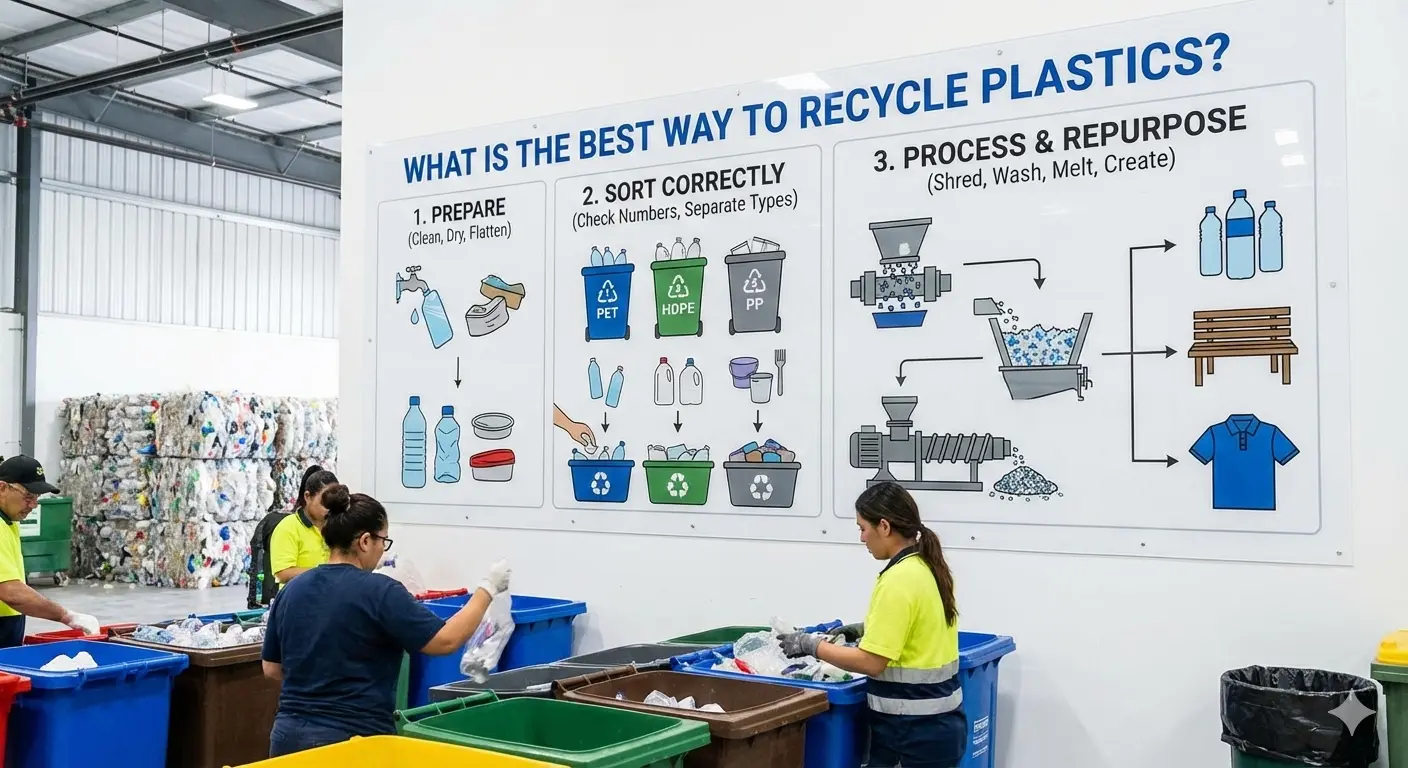
What is the best way to recycle plastics? Plastic recycling has become one of the most critical environmental and industrial challenges of the modern world. With the rapid growth of plastic production and consumption, finding the best way to recycle plastics is essential for reducing waste, protecting natural resources, and supporting sustainable manufacturing. Effective plastic recycling requires a combination of proper collection systems, advanced processing technologies, and responsible industrial practices.
The best way to recycle plastics is not a single method, but a structured process that maximizes material recovery, maintains quality, and minimizes environmental impact. This process involves sorting, cleaning, processing, and converting plastic waste into reusable raw materials.
Understanding plastic recycling
Plastic recycling is the process of collecting plastic waste and converting it into new materials or products. The goal is to extend the life cycle of plastics, reduce landfill usage, and lower dependence on virgin raw materials.
Recycling plastics effectively requires understanding:
- plastic types and resin codes
- contamination levels
- intended end-use applications
- available recycling technologies
Different plastics require different recycling approaches to achieve optimal results.
Collection as the first critical step
The best way to recycle plastics begins with efficient collection systems.
Plastic waste is collected from:
- households
- commercial facilities
- industrial production scrap
- packaging waste streams
Separate collection of plastics improves recycling efficiency and reduces contamination. Source separation at homes and factories significantly increases the quality of recycled materials.
Sorting plastics by type and quality
Sorting is one of the most important stages in plastic recycling.
Plastics are sorted by:
- polymer type (PP, PE, PET, PS, PVC)
- color
- thickness and form
- contamination level
Advanced recycling facilities use:
- optical sorters
- infrared scanners
- air classification systems
- manual quality control
Proper sorting ensures consistent material properties and high-quality recycled output.
Cleaning and washing processes
After sorting, plastics must be thoroughly cleaned.
Effective washing removes:
- food residues
- oils and chemicals
- labels and adhesives
- dust and dirt
Cleaning methods include:
- cold washing
- hot washing
- friction washing
Clean plastic input is essential for producing high-grade recycled materials suitable for industrial reuse.
Mechanical recycling as the most widely used method
Mechanical recycling is currently the best and most common way to recycle plastics.
This method involves:
- shredding plastic waste into flakes
- melting the flakes
- filtering impurities
- pelletizing into plastic granules
Mechanical recycling is ideal for:
- polypropylene
- polyethylene
- polystyrene
It is energy-efficient, cost-effective, and widely scalable for industrial use.
Chemical recycling as an advanced solution
Chemical recycling is an emerging method that breaks plastics down into their original chemical components.
This process includes:
- depolymerization
- pyrolysis
- gasification
Chemical recycling is suitable for:
- mixed plastic waste
- contaminated plastics
- multilayer materials
Although more expensive, chemical recycling allows plastics to be reused at near-virgin quality.
The importance of design for recycling
One of the best ways to improve plastic recycling is to design products with recycling in mind.
Design for recycling includes:
- using single polymer materials
- avoiding complex multilayer structures
- minimizing additives and dyes
- using recyclable labels and inks
Recyclable design simplifies sorting and improves recycling efficiency.
Industrial recycling and closed-loop systems
Industrial recycling plays a major role in efficient plastic recycling.
Closed-loop recycling systems allow manufacturers to:
- recycle production scrap internally
- maintain material consistency
- reduce waste disposal costs
- lower raw material expenses
Industrial scrap recycling often produces higher-quality recycled plastics than post-consumer waste.
Quality control in plastic recycling
The best way to recycle plastics includes strict quality control.
Recycled plastics are tested for:
- melt flow index
- density
- moisture content
- ash content
- color consistency
Quality control ensures recycled plastics perform reliably in manufacturing processes.
Role of recycled plastic granules in manufacturing
Recycled plastic granules are the final product of effective recycling.
They are used in:
- injection molding
- blow molding
- extrusion
- film production
Using recycled granules reduces production costs and supports sustainability goals without compromising performance.
Environmental benefits of effective plastic recycling
The best plastic recycling practices offer major environmental advantages.
Key benefits include:
- reduced landfill waste
- lower greenhouse gas emissions
- conservation of fossil resources
- reduced ocean pollution
Recycling plastics significantly lowers the environmental footprint of plastic products.
Economic benefits of plastic recycling
Plastic recycling also provides strong economic advantages.
Benefits include:
- lower raw material costs
- reduced dependence on virgin polymers
- stable material supply
- job creation in recycling industries
Recycling supports both environmental and economic sustainability.
Challenges in plastic recycling
Despite its benefits, plastic recycling faces challenges.
Common challenges include:
- mixed plastic waste streams
- contamination
- lack of standardized collection systems
- limited recycling infrastructure in some regions
Addressing these challenges requires cooperation between governments, industries, and consumers.
The role of manufacturers and consumers
The best way to recycle plastics depends on shared responsibility.
Manufacturers can:
- design recyclable products
- use recycled materials
- invest in recycling technologies
Consumers can:
- separate waste correctly
- reduce plastic consumption
- support recycled products
Together, these actions improve recycling efficiency.
Future trends in plastic recycling
Plastic recycling continues to evolve.
Future developments include:
- advanced chemical recycling technologies
- improved sorting systems
- digital waste tracking
- stronger environmental regulations
Innovation will play a key role in improving recycling rates worldwide.
FAQs about What is the best way to recycle plastics?
How can plastic be recycled?
Plastic can be recycled by collecting used plastic items, sorting them by type, cleaning them, processing them into flakes or pellets, and then manufacturing them into new products through melting and remolding.
How would you recycle plastic?
Plastic is recycled by separating it from other waste, identifying its polymer type, washing it to remove contaminants, shredding it, melting it, and converting it into reusable raw material such as pellets or granules.
What is the best way to recycle plastics?
The best way to recycle plastics is mechanical recycling, where clean and properly sorted plastics are reprocessed into new materials. This method preserves material value and supports a circular economy.
Is recycled plastic OK?
Yes, recycled plastic is safe and effective for many applications such as packaging, construction, textiles, and household products, provided it is processed and tested according to quality standards.
What are the 5 steps of recycling plastic?
The five main steps are collection, sorting, washing, processing (shredding and melting), and remanufacturing into new products.
Can plastic be 100% recycled?
Some plastics can be recycled multiple times, but most plastics degrade slightly each cycle. While 100% recycling is possible for certain products, it is not always achievable indefinitely.
Can all 7 types of plastic be recycled?
No, not all seven types are easily recyclable. PET and HDPE are widely recycled, while PVC, PS, and mixed plastics are more difficult and less commonly recycled.
What are 5 ways to reduce plastic?
Five ways to reduce plastic include using reusable bags and bottles, avoiding single-use plastics, choosing products with minimal packaging, recycling properly, and supporting sustainable alternatives.
Why do we recycle plastic?
We recycle plastic to reduce environmental pollution, conserve natural resources, save energy, decrease landfill waste, and lower greenhouse gas emissions.
What are the 7 steps of recycling?
The seven steps include collection, sorting, washing, shredding, melting, pelletizing, and manufacturing new products.
What are 5 examples of recycling?
Examples include recycling plastic bottles into fibers, paper into cardboard, aluminum cans into new cans, glass bottles into containers, and plastic bags into composite materials.
What are the four methods of recycling?
The four main methods are mechanical recycling, chemical recycling, biological recycling, and energy recovery through controlled waste-to-energy processes.
What are the 7 disadvantages of recycling?
Disadvantages include high processing costs, contamination issues, limited recyclability of some plastics, quality degradation, energy use, market price fluctuations, and the need for advanced infrastructure.
What are 10 harmful effects of plastics?
Harmful effects include ocean pollution, wildlife harm, microplastic contamination, soil degradation, water pollution, human health risks, greenhouse gas emissions, visual pollution, clogged drainage systems, and long-term environmental persistence.
What are 10 benefits of recycling?
Benefits include reduced waste, lower pollution, energy savings, conservation of raw materials, job creation, economic growth, reduced landfill use, protection of ecosystems, lower carbon footprint, and support for sustainable industries.
What are the 4 principles of recycling?
The four principles are reduce, reuse, recycle, and recover, focusing on minimizing waste and maximizing resource efficiency.
What are common recycling mistakes?
Common mistakes include mixing dirty plastics with recyclables, incorrect sorting, recycling non-recyclable plastics, bagging recyclables improperly, and ignoring local recycling guidelines.
What happens to plastic that isn’t recycled?
Plastic that is not recycled often ends up in landfills, is incinerated, or leaks into the environment, where it can persist for hundreds of years and cause significant ecological damage.
Conclusion
The best way to recycle plastics is a comprehensive approach that combines efficient collection, advanced sorting, proper cleaning, and suitable recycling technologies. Mechanical recycling remains the most effective and widely used method, while chemical recycling offers solutions for complex waste streams. By improving product design, strengthening recycling systems, and encouraging responsible behavior, plastic recycling can become a powerful tool for environmental protection and sustainable manufacturing.
Polypropylene granules in UAE are the perfect choice for industries seeking high-quality, affordable, and sustainable raw materials. With the UAE’s growing position as a global petrochemical hub, investing in polypropylene is a strategic move that ensures competitiveness in international markets.
We invite you to explore Alarkan Plastic’s wide range of high-quality polypropylene and polyethylene granules.
Our innovative and recycled solutions are designed to support your industries with efficiency and competitive pricing.
Contact us today to learn more about our products or request a customized quotation.
We are here to serve your industrial needs.


Join The Discussion